
Key Takeaways
- Braces and Invisalign both straighten teeth, but they work differently and suit different needs.
- Braces tend to handle more complex alignment and bite issues.
- Invisalign is removable and nearly invisible, but requires wearing the trays 20 to 22 hours a day.
- Costs are similar, though Invisalign treatment often moves faster.
- A dentist in Calgary can help you figure out which option fits your situation.
Braces & Invisalign Have Different Advantages
If you’ve noticed that your teeth are crowded or that your bite feels off, you might be interested in straightening your teeth. But which option should you choose? Braces or Invisalign?
Neither option is better across the board. The right choice depends on what your teeth actually need, how you live your day-to-day life, and what you’re comfortable committing to for the next year or two. In this blog, our team at Bridgeland Dental Care breaks down the advantages of each option.
How Each Treatment Works
Traditional Braces
Braces use metal brackets bonded directly to your teeth, and connected by wires. Your dentist or orthodontist tightens these wires at regular appointments. The pressure from these adjustments gradually shifts your teeth into place.
Because braces are fixed, they work around the clock without any action on your part. This consistency makes them a good option for complex bite problems or when significant tooth movement is required.
Invisalign Clear Aligners
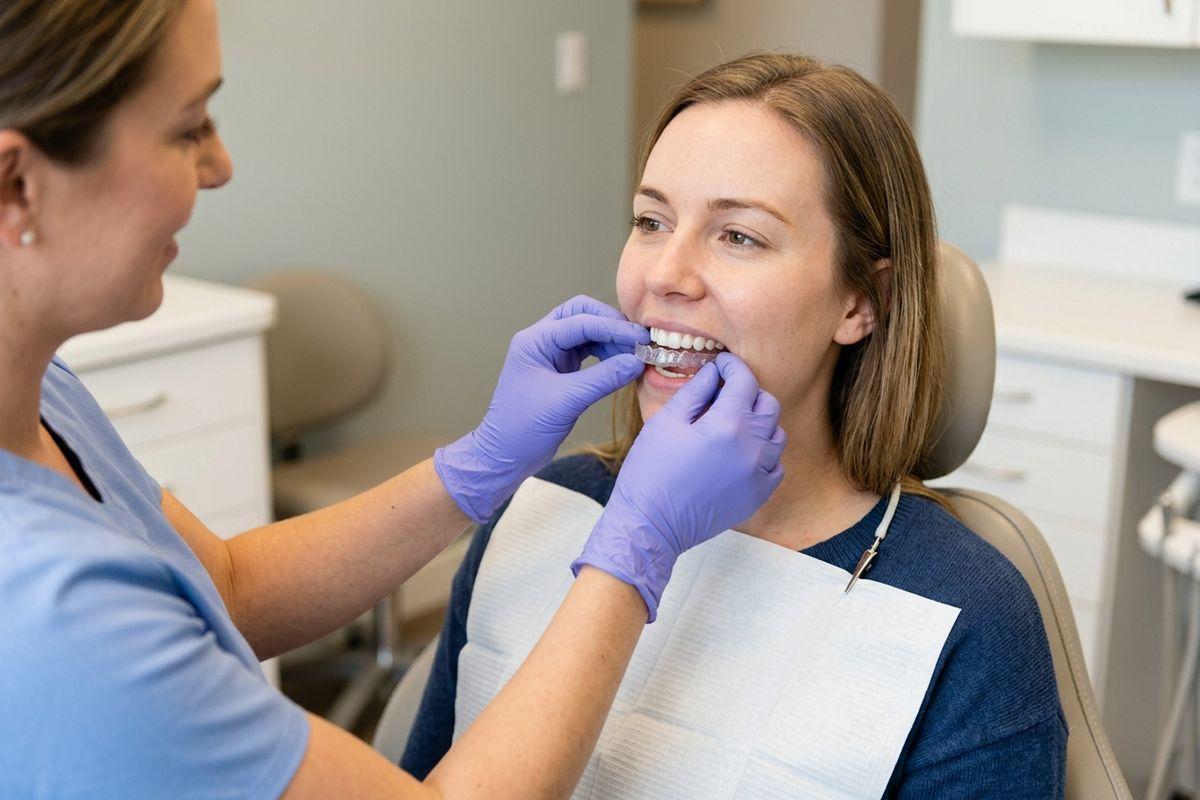
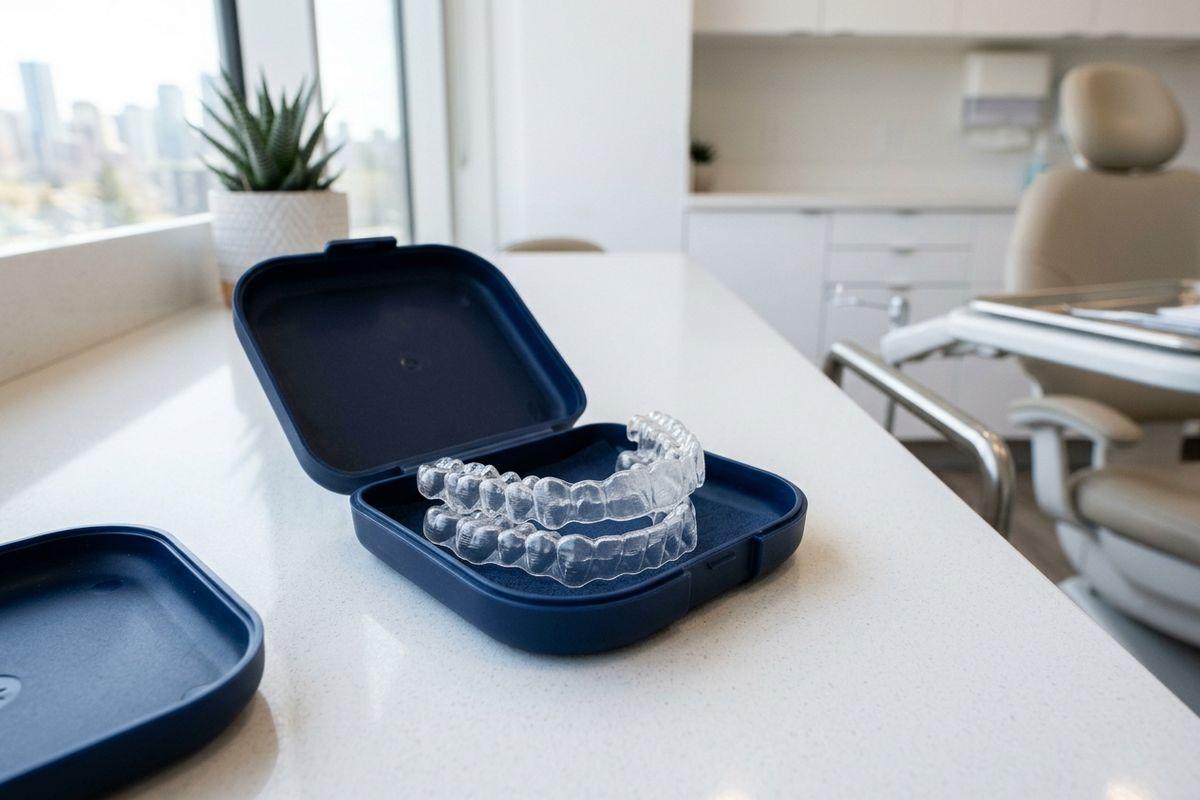
Invisalign uses a series of custom-made clear trays. You swap to a new set every 1–2 weeks, with each tray moving your teeth a little further along in the process. You take your aligners out to eat, drink anything other than water, and brush your teeth. The catch is that they need to stay in for 20 to 22 hours a day to actually do their job.
Appearance, Comfort & Daily Life
Invisalign Perks
If you want your treatment to be discreet, especially at work or in social situations, Invisalign is an appealing option, as the trays are nearly invisible. The smooth plastic also tends to be gentler on your cheeks and lips compared to brackets and wires. Plus, because you remove the trays before eating, there are no food restrictions during treatment.
Braces Perks
Braces don’t require any daily decision-making. You put them on once, and they do the work that they’re intended to do. This is a big advantage if you know that you’d struggle to wear your removable trays consistently.
Ceramic braces better match your tooth colour, so they’re less noticeable than traditional metal. For kids and teens, the option to choose band colours can actually make the whole experience more fun.
What Each Option Is Good At
When Braces Tend to Work Well
Braces are often the go-to for more complex cases. If you have a significant overbite, underbite, or teeth that are heavily rotated or crowded, braces give your dentist more precise control over how each tooth moves.
When Invisalign Is a Strong Fit
Invisalign tends to work well for mild to moderate crowding or spacing concerns. It’s also a popular choice for adults who want their treatment to be as discreet as possible.
If your alignment concerns fall into that mild to moderate range and discretion matters to you, Invisalign is worth a serious look.
Cost & Treatment Time
Both options sit in a similar price range, though costs can vary depending on the complexity of your case and your location.
- Invisalign typically ranges from $3,000 to $7,000
- Braces typically range from $2,500 to $6,000
- Invisalign treatment often averages 12 to 18 months
- Braces typically run 18 to 24 months
If you’re interested in orthodontics, it’s worth checking whether the Canadian Dental Care Plan applies to any part of your treatment. Depending on your household income and insurance coverage situation, the CDCP may cover some of your costs.
How to Choose the Right Option for Your Smile
Questions Worth Thinking About
Before your consultation, it helps to have a sense of what matters most to you. Here are a few things to consider:
- How much does it matter to you that your treatment is low-profile during the day?
- Are you comfortable being responsible for removing and replacing a tray consistently every day?
- Do you have a more complex bite issue, or is it mainly spacing and mild crowding?
Your Next Step
The honest answer is that no blog can tell you which option is right for you. Your teeth, your bite, and your lifestyle all factor in. A dentist in Calgary can take a look at your situation and walk you through what each option would involve.
At Bridgeland Dental Care, our team takes the time to listen to your questions and explain your options without any pressure. If you’re thinking about straightening your teeth and want to talk through what makes sense for you, reach out to book a consultation today.