
Key Takeaways
- Tartar (also called calculus) is plaque that has hardened onto your teeth, and brushing and flossing can’t remove it.
- Baking soda scrubs, vinegar rinses and do-it-yourself scrapers don’t safely remove tartar, and some can damage your enamel and gums.
- You can slow new buildup with twice-daily brushing, daily cleaning between your teeth and regular dental visits.
- A hygienist removes tartar safely with scaling during a professional cleaning.
If you’ve noticed a rough, yellow or brown layer along your gumline, you’ve probably wondered whether you can scrape it off yourself. It’s a fair question, and plenty of online advice makes it sound easy. The reality is less convenient: once plaque hardens into tartar, brushing and flossing can’t remove it.
Tartar has to be removed with professional tools during a dental cleaning, but there is a lot you can do at home to keep it from building up in the first place.
What Is Tartar?
Plaque is the soft, sticky film of bacteria that forms on your teeth every day. If it isn’t cleaned away, minerals in your saliva harden it into tartar, also called calculus. Plaque can begin to harden within days.
Tartar sticks firmly to the tooth surface and to the gumline. Its rough, porous surface picks up stains and gives new plaque a place to cling, so buildup tends to speed up once it starts. It often collects behind the lower front teeth and on the cheek side of the upper back teeth, near where saliva enters the mouth.
Why Tartar Matters
Tartar is more than a cosmetic problem. It holds bacteria against your gums, and gum disease begins when plaque builds up along and just below the gumline. The early stage is gingivitis, a mild inflammation of the gums that can often be reversed. Left alone, it can progress to more serious gum disease.
Gum disease often develops without pain, so the early signs are easy to miss. Watch for:
- Red or swollen gums
- Gums that bleed when you brush or floss
- Bad breath that doesn’t go away
- Rough, hard buildup you can feel along the gumline
Why Home Remedies Don’t Work
Many online guides suggest ways to remove tartar yourself. Here is why they fall short.
Baking Soda
Baking soda is a mild abrasive. It can lift some surface stain, but it doesn’t break the mineral bond that holds tartar to your tooth. Scrubbing harder to make up for that can wear your enamel and irritate your gums.
Vinegar Rinses
Vinegar is acidic, and acid can soften and wear down enamel. Dental professionals don’t recommend rinsing with vinegar to remove tartar, and gargling it daily can do more harm than good.
Scrapers and Tartar Removal Kits
Metal picks and scalers sold online look like the tools hygienists use, but they are easy to misuse. You can scratch enamel or cut gum tissue, and you can’t see below the gumline, where much of the tartar sits. Scratched enamel is easier for plaque to stick to, so these tools can make the problem worse.
How to Slow Tartar Buildup at Home
You can’t remove tartar at home, but good habits keep plaque from hardening in the first place.
- Brush twice a day for two minutes with a fluoride toothpaste and a soft-bristled brush, angling the bristles toward the gumline.
- Clean between your teeth every day with floss or interdental brushes, since a toothbrush can’t reach those spots. A water flosser can help if floss is hard to use.
- Consider a tartar-control toothpaste. Some formulas can help slow new buildup, but they won’t remove tartar that has already formed.
- Limit sugary snacks and drinks, which feed the bacteria in plaque.
- Avoid smoking and vaping. Tobacco use is linked to more buildup and a higher risk of gum disease.

How a Dentist Removes Tartar
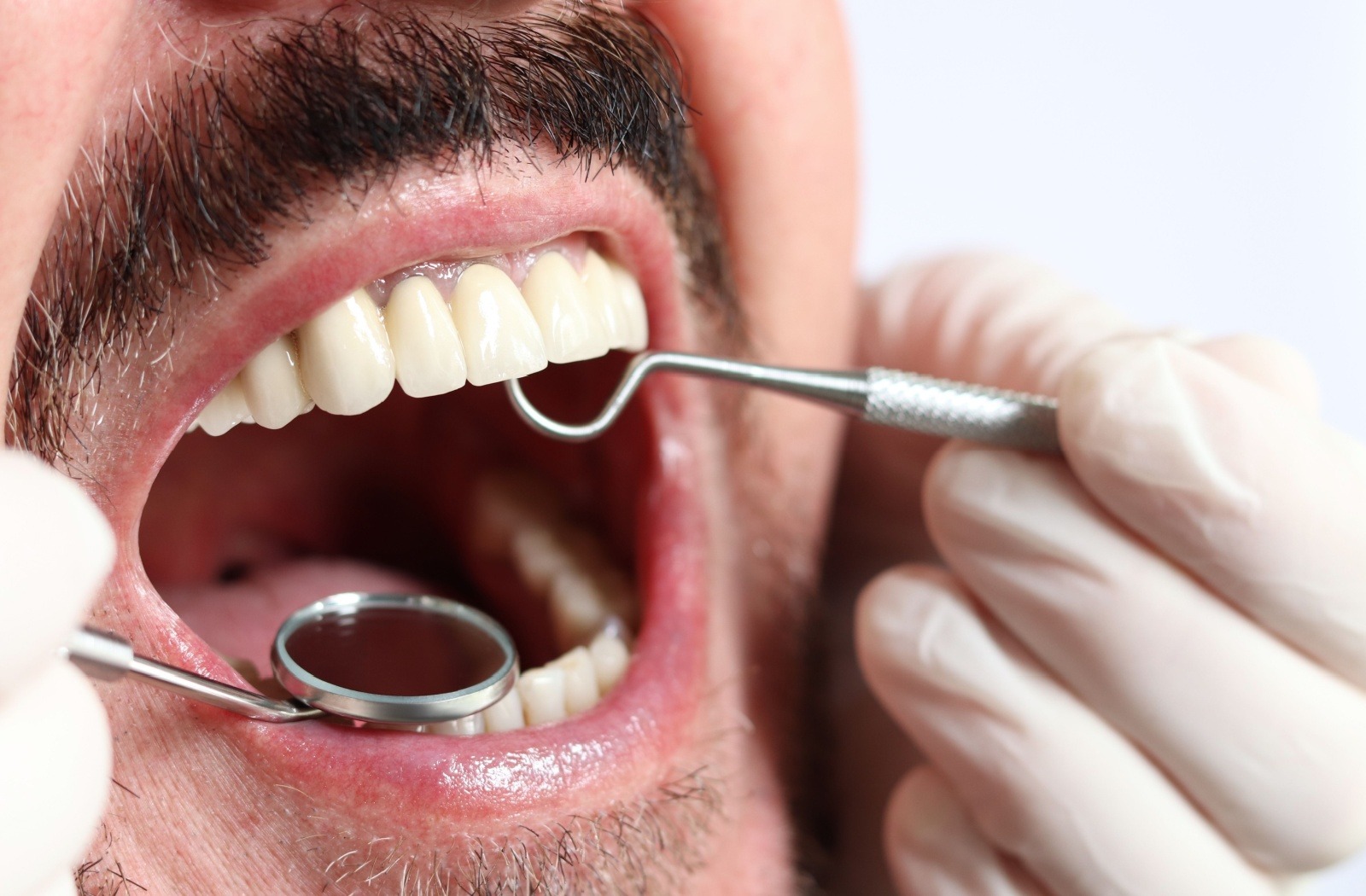
At a professional cleaning, your hygienist removes tartar with a technique called scaling. They may use an ultrasonic scaler, which breaks up deposits with vibration and water, along with hand instruments to remove what’s left, including tartar below the gumline. Your teeth are then polished to smooth the surface and remove stain.
Scaling is usually comfortable. Some people notice mild sensitivity, especially if their gums are inflamed or their roots are exposed, so tell your hygienist if anything bothers you. If you have heavy buildup below the gums, your dentist may recommend a deeper cleaning.
How Often Do You Need a Cleaning?
A cleaning every six months is a common starting point. You may need to come more often if you build up tartar quickly or have gum disease. Your dentist or hygienist will recommend a schedule that fits your mouth.
When to Book a Cleaning
Book a visit if you notice any of the following:
- Hard, rough buildup near the gumline that won’t brush away
- Red, swollen or bleeding gums
- Bad breath that sticks around after brushing
- It has been more than six months since your last cleaning, or longer than your hygienist suggested
Book a Cleaning at Bridgeland Dental Care
If you’re dealing with tartar, the safest fix is a professional cleaning. Our team at Bridgeland Dental Care in Calgary can remove the buildup, check your gums and show you how to keep it from coming back. Learn more about dental exams and cleanings, or call to book your next appointment.