
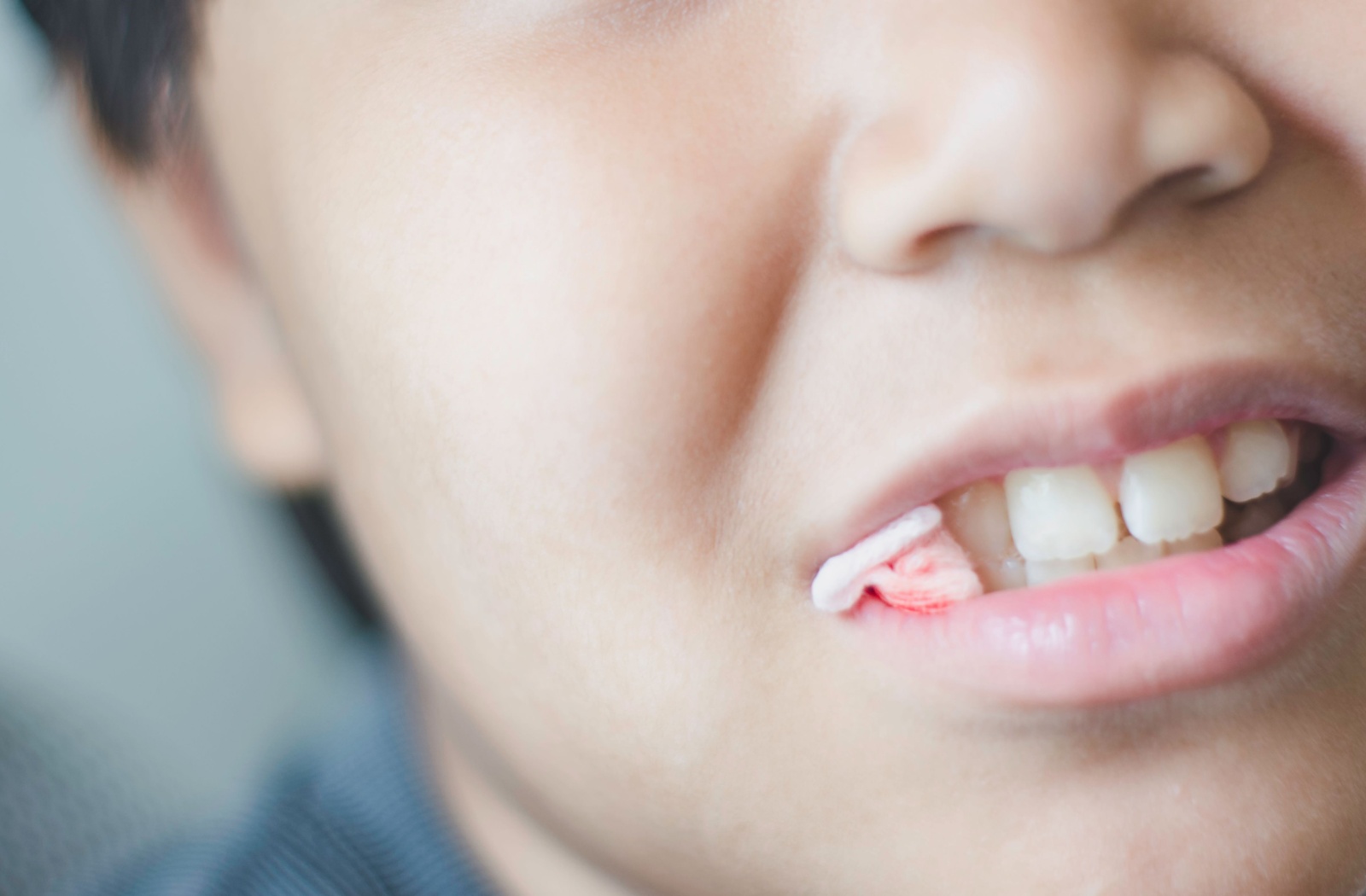
After a tooth extraction, you head home from a practice like Bridgeland Dental Care with a mouth full of cottony gauze and a list of instructions. It’s normal to feel a bit unsure about what to do next, as all dental procedures have their own aftercare steps. You might wonder how long you should keep the gauze in or what signs to look for before taking it out.
You can stop using gauze when the bleeding has slowed to a light ooze or stopped completely, which usually happens within three to four hours after your procedure. When you change the gauze, and it comes out mostly clean, you likely don’t need to use it any longer.
The Role of Gauze After Your Procedure
How Gauze Helps You Heal
That simple piece of gauze plays an important part in your recovery. Biting down on it creates a gentle, steady pressure on the area where the tooth was. This helps slow the bleeding down so your body can get to work on the next step—forming a blood clot.
Think of this blood clot as a natural bandage that covers the sensitive spot. The gauze not only helps the clot form, but also protects the area from food particles or your tongue while the initial healing begins. It’s a simple tool that supports your body’s natural recovery process.
A General Timeline for Gauze Use
The First Few Hours
Knowing what to expect can make your recovery feel more manageable. For the first 30 to 60 minutes after your appointment, you should keep the initial gauze pack in place with firm pressure. After that first hour, you can start changing the gauze as needed.
- Initial 30 to 60 minutes: Keep the first piece of gauze in place.
- Next 1 to 3 hours: Change the gauze pad every 30 to 60 minutes, or if it becomes soaked.
The Main Sign to Stop
You don’t need to use gauze for the rest of the day. However, it’s still important to watch for changes in the bleeding. You can stop using gauze once the bleeding slows down significantly and the gauze pad comes out clean or with just a slight pink tinge.
- Gauze comes out clean or nearly clean when you change it.
- Bleeding has stopped or slowed to a light ooze.
- This usually happens within 3 to 4 hours of your procedure.
When to Check With Your Dentist in Calgary
Signs to Keep Gauze in Place
If you change the gauze after an hour and it’s still soaked with bright red blood, it’s a good idea to put a fresh piece in. Continued bleeding just means your body needs a little more time and pressure to form a stable clot. Continue to change the gauze every hour until the bleeding slows.
When to Call the Office
As your dental team, we’re here to support your healing. Call our office if you experience heavy bleeding that doesn’t slow down after four hours of continuous pressure, as this may be a sign of a dental emergency. It’s also a good idea to get in touch if you have severe pain or notice a bad taste in your mouth. A quick call to your dentist in Calgary can provide peace of mind and guidance.
Why You Should Not Use Gauze for Too Long
Potential Setbacks from Overuse
While gauze is helpful at first, using it for too long can get in the way of your healing. The blood clot that forms in the empty socket is very important for a smooth recovery. Leaving gauze in for too long—or changing it too often—can disturb or dislodge that protective clot, leading to potential oral health complications.
When the clot is disturbed, it can slow down your healing process. This can also increase your chance of developing dry socket, an uncomfortable condition that happens when the underlying bone and nerves are exposed. Once bleeding is under control, it’s best to leave the area alone.
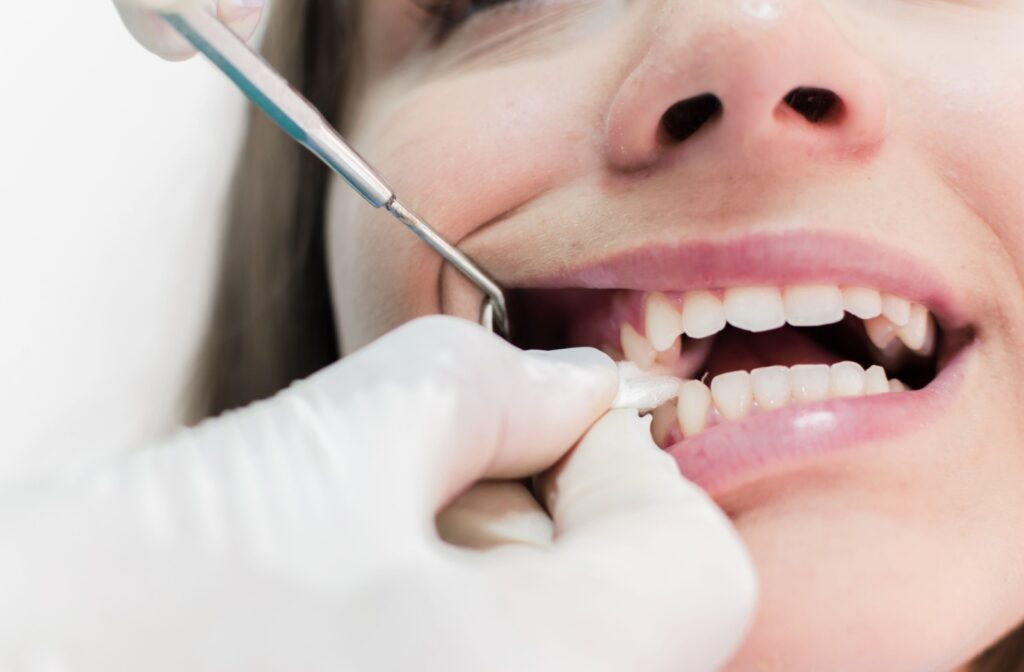
Care Tips After You Remove the Gauze
Simple Ways to Support Your Recovery
After you’ve removed the final piece of gauze, your job is to create a calm environment for healing. For the first couple of days, focus on simple habits that protect the extraction site and help you feel more comfortable.
- Stick to soft foods such as yogurt and lukewarm soups.
- Avoid using straws and spitting, as the suction can dislodge the blood clot.
- You can gently rinse your mouth with a warm saltwater solution after 24 hours to help keep the area clean as part of a good oral hygiene routine.
At Bridgeland Dental Care, our team wants you to feel comfortable and confident during your recovery. If you have questions about your healing process or need advice, reach out to your dentist in Calgary. Our team is here to help you heal well.